

Per the American federal laws known as the Americans with Disabilities Act (ADA) and the Rehabilitation Act of 1973, all students in America with disabilities have legal rights to educationally related accommodations. Thus, every university and college must have a program designed to make sure these federal laws are applied. The ultimate goal is to ensure each student has “equal access” to their education.
In this blog I am going to provide useful information so future or current students at the University of Arizona, and their families, understand what rights each student has at their disposal. If you have certain mental, physical or learning disabilities, you have the legal right to seek accommodations that will guarantee you have equal access to your educational curriculum.
Throughout this blog I will draw from my over 20 years of experience as a PhD psychological expert who has expertise with understanding how mental health issues can impact learning. I will also draw from my two decades of experience providing comprehensive neuropsychological evaluations to University of Arizona students to help them obtain the accommodations they need to perform well in college. At the University of Arizona, you must request accommodations through University of Arizona Diagnostic Resource Center (DRC).
It is critical you understand from the outset that just because federal law gives students the right to seek accommodations, they are not automatically given. Just because you have a diagnosis or an impairment does not automatically guarantee you get educational accommodations. Instead, students must provide appropriate documentation. This documentation often involves the need to obtain credible psychological or neuropsychological evaluation completed by a licensed psychologist.
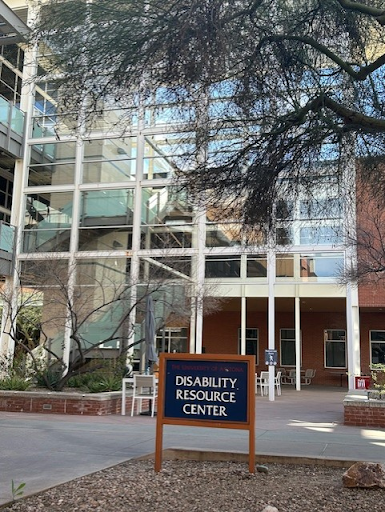
What is the University of Arizona Disability Resource Center?
The University of Arizona Disability Resource Center (DRC) is the program at the University of Arizona that students must use if they wish to obtain classroom related educational accommodations. An educational accommodation at the University of Arizona (or at any other college or university) is definable as a change to the learning environment, instruction, or testing method that is customized to a student with a disability.
These customizations allow a student with a disability equal access the general curriculum and demonstrate knowledge without lowering academic standards. Practically speaking, educational accommodations modify how a student learns, not what they learn.
The DRC’s stated vision is to create a campus that is accessible to all disabled and non-disabled students, employees and guests, to make sure all community members are welcomed into the campus culture. The DRC accomplishes this vision of providing disability accommodations at the University of Arizona by ensuring all curricular, workplace and technology are equally accessible to all members of the University of Arizona community. Curricular accommodations were referred to accommodations regarding academic curriculum. Workplace accommodations referred to accommodations for those employees of the University who need a customized work environment. Technology accommodations refers to allowing technology to be delivered to people in a format that can account for a disability they have.
In this blog I am going to cover the following 7 topics:
1-What types of accommodations are available through the DRC
2-How do you apply for UA DRC accommodations
3-What kind of documentation is required for UA DRC accommodations
4-A Psychologist’s Perspective on creating UA DRC ready evaluations
5-What are common challenges students face with UA DRC applications
6-Transitioning from high school IEPs/504 plans to UA accommodations
7-Additional campus resources that work with the UA DRC
1. Types of accommodations available through the UA DRC
The UA DRC is a centralized hub that provides services, resources, and programs that facilitate equal learning and working opportunities for disabled faculty, staff, students, and guests of the University.
Before I clarify what types of accommodations the DRC can offer, it’s critical for you to understand that if you are a student applying for accommodations through the DRC, you will be assigned what is called an “access consultant”. The DRC application process will require you and your access consultant to have back-and-forth conversations so the DRC gains a nuanced understanding of why you are asking for accommodations. Remember, the DRC is the organization on campus that will ultimately decide if you get accommodations.
It may be that you request five different types of accommodations and the access consultant will decides you only have documenting supporting three of those five accommodation requests. This is why obtaining appropriate documentation before you apply is critical. As a PhD neuropsychologist who has worked very closely with the DRC for over 20 years, I’ve seen many people apply the DRC who had evaluations that were superficial, leading to denied accommodation requests.
Here in Tucson the DRC provides a diverse array of accommodations, which fall under one or more of the following domains: Access to lecture content, alternative learning formats, animals on campus, dorm or residence hall living, exam access, pregnancy accommodations, sign language interpreters, CART captioning and study abroad.
I am going to focus on the three most heavily used accommodation domains: testing accommodations, classroom and course accommodations and technology and materials access.
Testing Accommodations
First, it is critical you understand the UA DRC lingo. The UA DRC uses the global term “exam” to describe any formalized evaluative assessment such as end of term tests, midterms, quizzes, knowledge checks, etc.
Examples of accommodations that might be made for a student would include being allowed to:
• do a take-home exam instead of having to do the exam in the classroom
• have extra time to complete an exam
• extra breaks during an exam
• use a calculator
• have formulas in front of you that you can visually reference during an exam
• take an exam on paper instead of having to do it on a computer
Classroom and Course Accommodations
Examples of University of Arizona classroom and course accommodations include allowing a student to have:
• preferential seating such as sitting up front
• lecture slides or notes in advance of a class period
• a laptop or tablet for notetaking
• assistive listening devices for those who are hearing impaired
• a flexible attendance policy if they have a particular medical condition or disability that disallows them to attend every single class period
Technology and Materials Access
Examples of accommodations in this area would include allowing a student who is blind to obtain a textbook converted into braille so they can read using their fingers.
Publishers of college textbooks have online website pages that provide information for students requesting various types of print related disabilities. Links to these publishers is located on the UA DRC website.
2. How do you apply for DRC accommodations
For future University of Arizona students, the DRC has four specific steps they outline on their website. Of note, it is critical that students apply at least several months before the semester they want to begin receiving their accommodations. These are the 4 steps:
Step 1
On the UA DRC Tucson website students can click on the “Student Affiliation Form” link which will take them to a website page where they need to put in their net ID and password. From there they can complete an application. It is critical for parents and students to understand that unlike the way special education services work at the elementary school or high level, as a college student, you decide if and/or when to request accommodations by connecting with DRC. No accommodations are automatically given.
Step 2
The student needs to meet with an “Access Consultant” after they have completed the online application form. Once the University of Arizona student completes the online form, the UA DRC will send that student an email using their university email account. This information will include guidance on how to schedule a meeting with an access consultant to discuss access and accommodations as a UA student.
This meeting is completely confidential, and a student’s disability information will never be disclosed to faculty or other campus personnel. It is important for students and their parents to know that some University of Arizona accommodation requests may be able to be quickly allowed without the need to meet with an Access Consultant if appropriate documentation is presented.
Step 3
After that initial conversation between the student and their assigned UA access consultant, that consultant will determine if any accommodations should be given. The DRC staff member may review a wide variety of types of evaluations, such as a previous psychological or neuropsychological evaluation. They may also review your course syllabi and talk with your future university teachers. It is important you be prepared to give additional information. That is why upfront you want to pull together all documentation that’s been collected over the years regarding your disability.
Remember, it’s important that you not just have documentation of your disability. Rather, you need to as clearly as possible have a written statement about how your disability impacts your ability to learn. This can take a lot of time, and you may want to consult a psychologist or neuropsychologist who is experienced in conducting what are called psychoeducational evaluations.
Step 4
Stay connected to the DRC! Even if you are granted one or more accommodations, you must continue to communicate with and update the DRC. For example, if you obtain any updated evaluation related your disability you need to submit that the DRC. Also, if there any problems with a professor applying an accommodation, you need to immediately communicate with your access consultant. Additionally, if an accommodation is not working for you then you need to talk with your access consultant.
Remember, if you are a returning student, and your accommodations have already been established, you can reactivate them by accessing the student login link. For step-by-step instructions on re-activating accommodations, you can view the DRC’s activating accommodations tutorial.
3. What kind of documentation is required to get UA DRC Accommodations
Occasionally students can request disability-related accommodations without written medical or disability documentation. This can be done by talking with a UA DRC access consultant. Conversations with access consultants about your past experiences and future expectations help clarify if additional information is necessary to support your accommodation requests.
However, most students choose to upload disability documentation during the UA DRC application process. Typically, the University of Arizona, like most other universities and colleges, will look for some type of written documentation that proves the presence of the disability.
Per Arizona law, the following types of records are sufficient to prove you are a person with a disability:
• formal psychological or medical evaluations from a relevant licensed professional
• past accommodations and services from a public or private school
• past accommodations and services from another college
• past accommodations and services from a state or high stakes testing organization
• letters from past health, education, or service providers
• documentation from a military service branch
The high school vs. college disability accommodation experience
It is critical for college students to understand that they must self-identify and request accommodations. Secondly, unlike in high school where parents are very involved in this process, parents are not involved in this process unless the student authorizes it at the college level. Thirdly, at the college level academic curricula cannot be modified, but at the high school level curriculums can be modified. Also, while a high school IEP or 504 plan itself is enough to receive accommodations, these types of documentation on their own are usually not sufficient at the college level.
Specifically, colleges typically require a current clinical evaluation or diagnosis, involving documentation from a licensed professional. Usually, colleges and universities want to see an evaluation that’s been done in the last 3 to 5 years. The licensed professional needs to provide evidence of a functional impairment and an explanation of why accommodations are necessary.
The most common type of evaluation that would be conducted for students with ADHD or learning disabilities would be a neuropsychological evaluation completed by a licensed psychologist.
4. Creating “DRC Ready” Evaluations: A Psychologist’s Perspective
For over 20 years I have provided evaluations for students applying for accommodations through the University of Arizona Diagnostic Resource Center (DRC). For over two decades I have been on the UA DRC’s list of approved evaluators. I continue to be a well-recognized PhD learning disability evaluator who has completed over 50 DRC related evaluations.
My focus is always to provide evaluations that are customized to exactly what the DRC is looking for. One way I have done this is to remain in regular communication with many DRC staff. For example, for many years I would communicate regularly with the DRC’s past director, Cheryl Muller. By tailoring evaluations, I maximize the chances each student will obtain appropriate accommodations easily.
My focus is to go beyond writing the generic report so it is “DRC ready”. To do this, I know it is critical that as a neuropsychologist I go beyond simply identifying if a clinical condition is present, such as ADHD or a specific learning disability. Instead, I ensure that I make this student and their DRC access consultant acutely aware of how that condition is interacting with the student’s personality and attitude toward learning. Tutors are more interested in knowing about your learning style than simply hearing you have a generic diagnosis.
Examples of more nuanced information I include in reports includes the following:
• clarify how a disability affects a student’s ability to listen when the teacher is talking
• clarify how would disability affects a student’s ability to take notes
• clarify how disability affects a student’s ability to study
• clarify how disability affects a student’s ability to complete an exam on time
Overall, my evaluations focus on helping each University of Arizona student understand how they can use their strengths and talents to overcome any learning challenges so they can reach their true potential.
5. Common challenges students face with DRC applications
There are a multitude of common challenges students face when they apply to the UA Diagnostic Resource Center here in Tucson. Examples include the following:
-having outdated documentation from high school
-having a generic neuropsychological report that does not clarify how a diagnosis actually impacts a student’s learning
-waiting until it is too late to submit documentation
-assuming that a letter from a pediatrician or primary care doctor is sufficient
-assuming that just because a high school granted an accommodation that means the college must grant the same accommodation
-assuming that a diagnosis from a psychiatrist on its own is sufficient to justify an accommodation
All of these problems are solvable if a student plans ahead and obtains a quality comprehensive neuropsychological or psychological evaluation. To understand the difference between good and great psychological assessment, you can read my blog about this topic. Many families I work with over the last 20 years have reported they spent a great deal of money on a psychological or neuropsychological evaluation which gave a diagnosis but did not clarify how the diagnosis actually impacts learning. Thus, it is critical that before you choose a psychological evaluator you need to try and obtain sample reports that psychologist has written. For example, I always provide potential clients with sample reports I have written over the last two decades.
6. Transitioning from high school IEPs/504 Plans to college accommodations
It is surprising to many students and parents that high school Individualized Education Plans (IEPs) do not automatically transfer to college. The reason for this is college disability services operate under different laws, goals and standards. While an IEP can provide valuable background information, colleges must make their own determinations about whether accommodations are justified.
High school IEPs are governed by the Individuals with Disabilities Education Act, or IDEA. The IDEA law guarantees special education services and individualized education to high school students with disabilities. In contrast, colleges operate under the Americans with Disabilities Act (ADA) of 1990 and the Section 504 of the Rehabilitation Act. Under these laws colleges must provide “equal access”, whereas these federal laws require high schools to provide “special education.” Colleges do not need to provide special education.
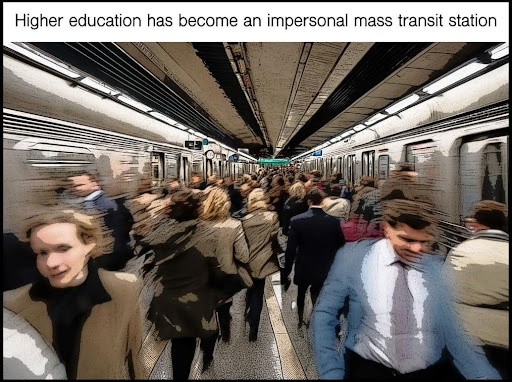
Secondly, it is critical to understand that while IEPs can include modifications such as reduced workload or shortened assignments, colleges generally cannot lower academic standards. Thus, many IEP’s services do not apply. Colleges can only try to make sure each student has equal access to the curriculum. Meanwhile, if high school students have a severe enough disability, their high school will often lighten the workload for that student. Sometimes high schools even lower their standards so that students can graduate. This is sometimes called “social promotion”. Colleges are not allowed to do this.
Overall, much more customization is allowable in high school versus in college. Also, since college courses demand a higher level of challenge and learning, high school IEP offices do not address the full array of accommodation needs a student will have. This is why students with learning disabilities sometimes have great difficulty transitioning to college.
This is also a reason why over my 20-year career I have worked with hundreds of college students who come to me after their first academic term where they have struggled mightily. The problem is that college freshmen do not look far enough ahead into the college territory and seek a neuropsychological evaluation that would ensure they acquire the appropriate accommodations before they start college. Neuropsychological evaluations by licensed psychologists like myself are often critical to ensuring students can successfully hike up a much deeper educational terrain.

7. Additional UA campus resources that work with the UA DRC
If you are considering using the DRC center to obtain an accommodation, and you have a learning disability, a comprehensive neuropsychological evaluation is often the first step. I welcome inquiries from families navigating this process. I offer a full menu of neuropsychological, psychological and learning disability assessments. You can visit my website to see the specific information I offer regarding the assessment of learning disabilities as well as ADHD.
In addition to the services the DRC center offers, there are many other supportive resources for students who have learning challenges, writing difficulties or who have mental health problems. Here is a list of other UA organizations helping those with learning or psychological challenges:
The UA SALT Center (520.621.1242) at the University of Arizona is a program that provides customized tutoring and consultation services to help students with learning differences, learning disabilities or those with attention related problems.
The UA THINK TANK (520-626-0530) at the University of Arizona provides academic support, such as writing support, for any student attending the University of Arizona.
The UA Counseling and Psych Services (CAPS) center (520-621-3334) is mental health facility which offers services provided by licensed mental health professionals who help students cope with difficulties they are experiencing.
UA Campus Health Services (520-621-6516) is a place where students can seek medical healthcare, as well as obtaining services to bolster health, wellness and safety.
Conclusion
The University of Arizona DRC is a student’s gateway to equal access to their curriculum. But while accommodations are rights, not privileges, you still must substantiate the presence of your disability. Because this can require significant documentation, you need to start the process early. When you have the proper documentation, it can make the process smooth, but if you don’t it can make the process very rocky.
One reason you have to start the process early is you might need to obtain a psychological or neuropsychological evaluation. If you do need to seek an evaluation, look for a professional who does not simply try to put you in a diagnostic box. Instead, look for someone who will not only identify your disability, but will also highlight how you can use your strengths and talents to conquer your disabilities so you have a roadmap to becoming your best self. Accommodations can allow you to reach your true potential in college, and can set you up for a very successful career path.
Feel free to contact me by filling out my contact form if you wish to consult someone who has insider knowledge of how this process works, or if you are looking for a reliable evaluation.
Related blogs
Great psychological assessment goes far beyond diagnosis
4 signs of great psychological assessment
The new way to send your kid to college: armed and ready to rock!
The increasingly hollow college degree and the career guidance scam
10 critical college readiness questions for parents and students