

Introduction
For several decades, I have had the privilege of mentoring University of Arizona psychology department students. I have offered them paid positions, volunteer opportunities, and research experiences.
These experiences have helped UA psychology students launch their careers. For example, my students have been accepted into prestigious school psychology, clinical psychology and forensic psychology programs around the United States.
These psychology students are served by the UA Psychology Department which is housed within the UA College of Science. Any student who is part of the psychology department can join a department-wide listserv where they will be regularly informed about off campus positions such as the one I offer through my independent neuropsychology practice.
It is critical for students to obtain real world clinical exposure because it shows them what it’s actually like to work as a psychologist. But because psychology is one of the most popular majors across many universities, obtaining off campus internships can be particularly challenging. For example, when I advertise for my psychology assistant position, I often receive up to 100 applications for only one available spot.
In this blog I’m going to give you information about the following 7 subjects so whether you are a student or parent, you understand the ins and outs of how a psychology student can build their resume to ramp up to a career in the diverse field of psychology.
1-Overview of the UA Psychology Department
2-Why Clinical Experience Matters for Psychology Students
3-Types of Clinical Experience Opportunities for UA Psychology Students
4-The Role of Mentorship in Career Development
5-Student Success Stories: Learning Through Real-World Practice
6-What Students Gain from Clinical Practice Experience
7-How to Pursue Clinical Experience Opportunities
8-Conclusion
About the University of Arizona Psychology Department
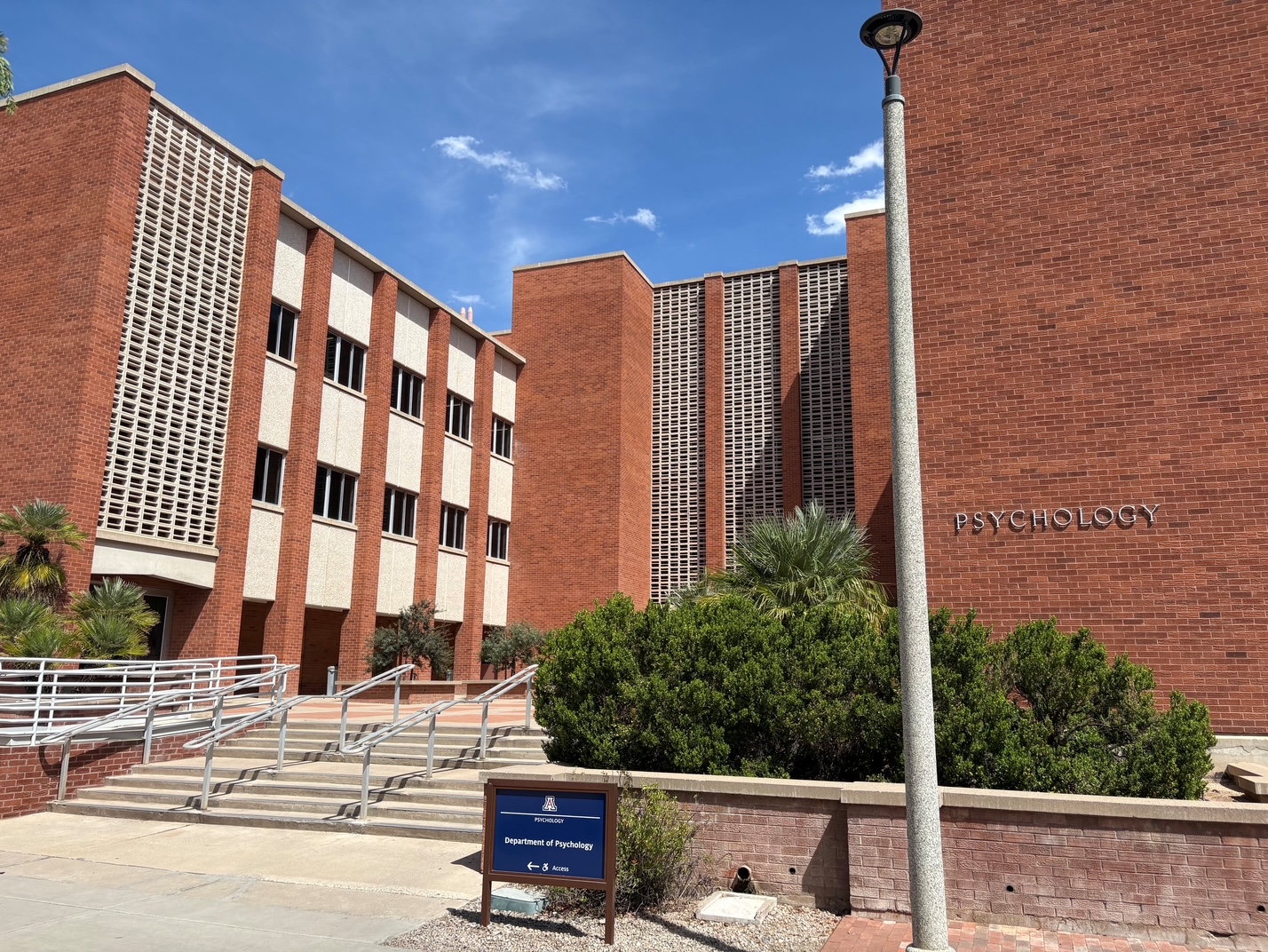
The psychology department at the University of Arizona is housed within the College of science. The College of Science reports that its mission is to bring together the disciplinary areas and expert faculty who work at the core of scientific inquiry and education. The College of science further clarifies that part of its mission is to make scientific knowledge accessible to students from all kinds of backgrounds.
The University of Arizona has several nationally ranked programs within UA’s College of science. Within the College of Science psychology program, there is an emphasis not only on learning the theory of science but on hands-on learning. The University of Arizona focuses on maintaining a connection between coursework and real world practice.
There are also various psychology tracks and specializations that are available at the undergraduate and graduate level. Undergraduate students at the University of Arizona can either obtain a BA or BS in psychology. They also can double major in Psychology and another undergraduate major or minor in psychology. The department of psychology also offers a Healthy Aging undergraduate certificate which is designed to provide an in-depth understanding of multiple dimensions of the aging process.
Why Clinical Experience Matters for Psychology Students
Even though many popular TV shows feature psychologists, such as crime dramas where a forensic psychologist has a main role, it can be hard to know what it is really like to be a psychologist. Hollywood does not always present an accurate picture of the in-the-trenches reality of what it is like to be a psychologist day to day.
Secondly, there’s often a very significant gap between what you learn in a classroom and what you learn when you actually practice in the real world. Hands-on psychology work experience is critical in order for you to gain a real world insiders view of what it takes to be a psychologist. Because psychology graduate level programs are incredibly competitive, it is critical for applicants to have hands-on experience in the real world of applied psychological practice. There’s nothing that can replace having experience working in the area of behavioral health.
The skills you can develop through clinical work cannot be learned in textbooks. Additionally, when you work in the field you meet other people who can help open doors for you, allowing you to expand the different opportunities available to you.
Students who gain UA psychology internships are able to undergo unique professional development that cannot occur when you’ve only had coursework under your belt. And the better the internship is, the more likely it is you can be accepted into a more competitive graduate level psychology program.
Gaining experience working with a clinical psychologist, school psychologist or forensic psychologist allows you to gain more clarity about what career direction you wish to go in. Off campus internships can give you the competitive edge you need in order to be successfully accepted into the graduate program of your choice. Adequate graduate school preparation requires you have at least three different off campus psychology internships.
Types of Clinical Experience Opportunities for UA Psychology Students
Volunteer and Practicum Experiences
University of Arizona psychology students have a broad array of volunteer and practicum opportunities available to them both on and off campus. Volunteer experiences tend to be more informal and offer more flexibility. Volunteer experiences do not tend to be tied to your academic program but rather are voluntary experiences you can choose to do to add to your professional resume.
Examples of volunteer experiences include helping at a crisis hotline, assisting in non-clinical and more administrative roles at a mental health clinic, and assisting clinicians during their work with people who have special needs.
In contrast to volunteer experiences, psychology practicum experiences are designed to be a formal training component in psychology programs, especially in graduate schools. When you work in a practicum you are usually paid for your work. Often a practicum lasts one to two semesters so its structure aligns smoothly with the academic schedule that graduate students are on.
Examples of work activities you would carry out during a practicum experience as a psychology graduate student could include the following: conducting supervised therapy sessions, administering psychological measures, and writing clinical notes and case reports. These are higher level tasks for which you would typically earn academic credit for. You are closely supervised by a licensed professional. Most often this licensed professional would be someone who has strong knowledge of the American Psychological Association (APA) Code of Ethics. As a practicum student you are essentially operating as a clinician in training.
Research Laboratory Opportunities
If you want to gain entrance into a psychology related graduate program, such as in school, clinical or neuropsychology, you must have experience working in a research laboratory.
Why? Psychology graduate programs are looking for students who have proven their dedication to learning the scientific method and applying it to complex questions in a way that is novel and contributes to the scientific community. By working in a research laboratory, it proves to graduate psychology review committees that you want to be part of a scientific team. Even if you want to go on and become more of a practitioner, it is important that you learn the scientific method because the mind is the most complex organism on planet Earth. Thus, to navigate the labyrinth of the mind methodically, you need to use the scientific method constantly.
Applying to a graduate program in the field of psychology is incredibly competitive. Thus, it is critical for you to get experience as early as your freshman or sophomore year, because at first you will be doing a lot of scut work (e.g., copying, physically setting up experiments, entering data into data sheets). But as you build up your time and credibility in the laboratory, you will become more trusted. It is only then that you will be invited to be part of a poster presentation or be asked to be a co-author on a peer-reviewed journal article.
Remember, the gold coin to get into graduate school is to have your name on one or more scientific peer-reviewed journal articles.
If you want to get into graduate school, by the time you are applying your resume will need to have at least two to three psychology laboratory experiences, and three to four poster presentations. And if you can possibly earn your way on to being a co-author of a peer-reviewed journal article, you will exponentially increase the chances you will be successfully accepted by a graduate psychology program.
Paid Assistant Positions
When you build up more experience with a research laboratory, sometimes the professor will decide to pay you for the work that you do going into the future. For example, if you prove yourself to be highly organized and efficient, the professor may pay you to become their laboratory coordinator. This is a unique distinction that would show graduate school application committees that you are mature, reliable and know how a research laboratory operates. This kind of position would allow you to stand out from hundreds of other applicants.
Other examples of paid assistant positions would be working as the administrative assistant for a psychology practice. For example, for over a decade I have offered University of Arizona psychology students the opportunity to work as my right hand assistant. The UA students who have worked for me have reported that my assistant position has allowed them to see what really goes on behind the scenes in a clinical and forensic psychology practice.
How to Pursue Clinical Experience Opportunities
There are many different volunteer experiences that would be beneficial, including helping at a crisis hotline, assisting in non-clinical and more administrative roles at a mental health clinic, and assisting clinicians during their work with people who have special needs. For example, here in Tucson you could consider volunteering for the Tucson Alliance for Autism or working for the Pima County Mental Health crisis line.
For research opportunities, click here to go to the University of Arizona’s undergraduate research website where the UA aggregates all of the different research opportunities available to University of Arizona psychology students. The University of Arizona also has an online website where it will show all of the different opportunities for psychology students offered across all of the departments housed within the UA College of Science. You can also sign up here to receive a weekly open research ambassador update which will give psychology students regular updates on undergraduate research events, opportunities, and deadlines to apply for on campus positions.
If you cannot find a research laboratory that has an opening, another way to gain more scientific credibility is to do a directed research experience with a psychology professor who’s willing to guide you through a directed research experience. A directed research experience is a class in which you work on a research project with a faculty mentor. Unlike a regular class, where you would follow a rigid fixed syllabus, a directed research project is much more open-ended. The key for a directed research project is it leads to a product. That product could be a research poster you present at a conference, a presentation you do at a conference, or a research paper that you author or co-author with fellow psychology laboratory members.
Many organizations around Tucson, both on and off the UA campus, offer paid assistant positions. Remember, you can look for medical as well as psychological opportunities, because having a background as an assistant to a medical practice also helps you look distinctive to graduate school application review committees. For example, the globally renowned pharmaceutical company Roche offers many well paying research positions.
The Role of Mentorship in Career Development
The field of psychology is voluminous and it is easy to get lost given its staggering breath. Finding mentors is critical because, as the Germans say, “you cannot put an old head on young shoulders”. People who have decades of experience in the subfields of psychology you are considering have a much higher altitude view of the field as a whole. Psychology career mentors have a birds-eye view of the psychology field labyrinth because they have traveled through it, and they can help guide you so you do not choose a path that will end up as a dead end.
For over two decades I have had the privilege of mentoring psychology students from UA’s College of Science. Students who have worked for me have come from many different departments including psychology, education and nursing. I have offered both paid positions and volunteer opportunities where students have worked for me as a research assistant. Many of my former students have gone on to enter prestigious graduate programs including University of Colorado and Stanford University.
Time and time again, the students that I have mentored have told me that the experience they had with me was pivotal to helping them see the career path they now find deeply fulfilling. Trying to navigate the field of psychology as a lone wolf can feel very isolative and depressing. I still remember trying to find my way in this field, where I experienced many dead ends. That is why I have committed myself to being a mentor who helps students make the wisest choices to minimize the pain and suffering that comes from misguided choices.
Mentors with advanced psychological training (e.g, PhD) and experience can help you understand your current talents as well identify the weaknesses you need to work on to become more well rounded. As the field of psychology becomes hypercompetitive, it is critical that you take ownership of your weakest qualities and work on them.
Student Success Stories: Learning Through Real-World Practice
One of the best ways for you to understand how mentored students feel is for me to share some quotes from my past University of Arizona psychology student assistants.

Grace Weigel’s experience working for Dr. Brunner and Associates propelled her into becoming a successful school psychology graduate student
Here is a direct quote from Grace Weigel, who worked for my practice, formally known as Dr. Brunner and Associates. Grace went on to be successfully accepted by the University of Colorado school psychology program.
“Working as an assistant to Dr. Brunner has been an amazing opportunity. By being immersed in the daily operations of an innovative psychology practice, I gained real-world insight into the field of psychology. In this position I was able to refine my professionalism and organizational skills as well as further develop my ability to navigate tasks with precision and independence. The accommodating nature of this position has allowed me to manage my academic responsibilities and graduate school applications while working part-time. Dr. Brunner’s excellent mentorship has provided me with a fulfilling job experience that has helped prepare me for my future career.”
Here is another direct quote from Kayleigh Cook, who is now a UA graduate and previous right hand assistant to Dr. Brunner and Associates:
“Being the administrative assistant for Dr. Brunner was the perfect transition out of my undergraduate career. This position gave me the amazing opportunity to hone my administrative, communication and organizational skills, all of which are necessary for success in most jobs, but especially when you are going into a career in research and academia. Dr. Brunner has been supportive and flexible when needed, and he understands that his assistant has many responsibilities outside of the office. He also has allowed me to give my creative input on a wide variety of office systems, which has allowed me to help things run more smoothly while gaining experience with different software programs. This experience has undoubtedly been what will separate me from other candidates moving forward in my career.”
A common theme running across these and other testimonials is the fact that the experience I offered allowed the student to take what they learned in the classroom and apply it to the real world. Secondly, students report that what they learned in the classroom only offers a limited view of what it’s really like to work in the often gritty field of psychology. It is one thing to academically study psychology, and it is a whole other thing to learn how a psychological expert like myself runs a market leading clinical, forensic and talent development practice.
What Students Gain from Clinical Practice Experience
There are many concrete skills that students develop when they work for organizations such as Dr. Bruner and associates. The skills they learn within paid psychology positions such as at my independent psychology practice go far beyond learning technical skills.
Why is this important? In the Artificial Intelligence (AI) era, soft skills are becoming more important than technical skills. When you apply to work for a company these days, technological skills are no longer your leading distinguisher. Hundreds of people competing with you for a position will have the same set of technical skills that you have. Thus, the only way to distinguish yourself is to prove that you have exceptional interpersonal skills. By having exceptional interpersonal skills, it shows the company that you know how to get things done while also making the work environment enjoyable for others.
Companies want people who make the work atmosphere more enjoyable, because the private industry has come to understand people do not stay with the company simply because they feel they are being paid enough, but rather because they find the work enjoyable. For example, the leading reason people leave companies is not because they feel they are not being paid enough. Rather, the leading reason, proven by business studies, is they have a poor relationship with their supervisor or a co-worker.
There is a myriad of soft skills that students gain when they work in real world clinical practice environments. For example, they learn how to handle the different types of clients that present to a psychology practice. I deeply train students how to handle clients who are highly anxious, angry, or narcissistic. These are common types of clients who present to my practice, and what I teach students is how to read the situation and interact with clients so they feel valued and understood.
Because I work with parents, families, children, and adults, I teach students how to adjust their tone and personality to each client. Every single person has a unique psychology to their mind, and I help students fine tune their approach to fit the unique temperament and personality of each client contacting my practice. This ability to quickly adjust to each client’s style and tone is a priceless skill that students carry with them for the rest of their lives.
Additionally, students see how I collaborate with pediatricians, medical specialists, occupational therapists and school staff. This helps the student develop their own set of professionally collaborative skills and understand that a great psychologist does not sit in their own office and try to come up with insights in a silo. Rather, it is critical for a psychologist to gather information from a multidisciplinary team of professionals whose experiences with a client need to be fully integrated into the psychological assessment of that client.
People who go into the field of psychology can sometimes have significant psychological problems of their own. I also teach students that they need to be aware of what their own issues are so they can develop the ability to be objective rather than biased by their own tendencies and skill gaps.
Conclusion
It is critical that you take advantage of a combination of both volunteer and paid applied and research positions so you explore the broad and deep field of psychology. These positions not only build your resume, but help you identify how you need to further develop your skill set.
Remember, in our era of AI, it is as important to develop your soft skills as it is your technical skills. By finding mentors who work with you closely, you open yourself up to receiving direct feedback about what you need to work on in order to become a more well-rounded person.
Time and time again, I have come to realize that what affects a student’s eventual destiny has far less to do with their talents, and much more to do with the degree to which they are willing to work on their weaknesses. It is student’s weaknesses that often cripple their professional advancement. But, an honest mentor will not only identify your weaknesses in a non-judgmental manner, but help you sand down those personality thorns.
Too many students over rely on the philosophy that if they trumpet their strengths on their resume, they will become successful in their psychology career. That used to be true but it no longer is a valid philosophy. What I see now is graduate school programs are more than ever looking for students who are humble enough to identify their weakest skills, both technical and soft skills, and work on those starting as early as freshman year in college.
I encourage you to seek out mentors as early as you can. These mentors can guide you through the labyrinth of the field of psychology. With tuition rates skyrocketing, these mentors can also prevent you from making a wrong turn in the psychology labyrinth which can cost you thousands of dollars.
If you are interested in considering working for a PhD psychological expert in private practice, please feel free to fill out my contact form. Please remember that there are other psychology related organizations that may have paid or volunteer opportunities, such as UA’s SALT center, or UA’s Diagnostic Resource Center (DRC).