

ADHD does not look the same in everyone. A 7-year-old boy bouncing around a classroom, a 30-year-old woman who cannot bring herself to open her email, and a teenager who keeps losing their phone may all have ADHD. But the signs often show up differently depending on age, sex, life stage, and even the time of month.
This guide walks through the symptoms of ADHD across four key groups: adults, women, men, and children. It also covers how those symptomatic signs change across the lifespan, and explains a phenomenon many people with ADHD describe but rarely see explained well: ADHD paralysis. By the end, you should have a clearer picture of what to look for, in yourself or a loved one, and when it might be time to talk to a professional.
This article is for general information only. It is not a substitute for a medical evaluation. Only a qualified healthcare provider can diagnose ADHD.
The Three Core Symptom Categories of ADHD
Before getting into how ADHD shows up differently across groups, it helps to know the basic building blocks. Every ADHD symptom falls into one of three categories: inattention, hyperactivity, or impulsivity. A doctor assesses the mix and severity of the symptoms to make a diagnosis of one of the three formal ADHD diagnostic subtypes: ADHD-Inattentive, ADHD-Hyperactive or ADHD-Combined.

Most adults experience a mix of all three categories of symptoms, though one or two symptom groupings may be more pronounced, depending on the person. In children, hyperactivity and impulsivity are often the most visible. In adults, inattention tends to take center stage as visible restlessness softens with age.
ADHD Symptoms in Adults
ADHD in adults often looks less like a hyperactive child and more like someone who is constantly behind, scattered, or burning out. Thus burning out is due to always feeling behind and overwhelmed by what has been forgotten. The hyperactivity rarely shows up as climbing furniture. It tends to show up as restlessness, racing thoughts, or an inability to relax.
Common signs of ADHD in adults include:
Daily life and organization
- Chronic lateness, even when leaving extra time
- Time blindness, or losing track of how long things take
- Trouble starting tasks, even ones that matter
- Forgetting appointments, bills, and birthdays
- Constant clutter at home, in the car, or at the desk
- Losing keys, phone, wallet, and glasses regularly
Work and focus
- Trouble finishing projects, even ones close to done
- Easily bored, then easily distracted
- Hyperfocus on things that are interesting, to the point of forgetting to eat
- Procrastinating until the deadline panic kicks in
- Difficulty in long meetings or training sessions
Emotions and relationships
- Strong emotional reactions, sometimes out of proportion
- Quick frustration, especially when interrupted
- Trouble listening all the way through a conversation
- Talking too much, or talking over others
- Impulsive decisions about money, food, or relationships
These are common signs of ADHD in adults, but having a few of them does not mean you have ADHD. The key is whether they show up in multiple settings (home, work, social), have been there since childhood, and clearly get in the way of daily life.
ADHD Symptoms in Women
ADHD in women is one of the most under-recognized presentations of the condition. According to Cleveland Clinic, women have similar rates of inattentive-type symptoms as men, but lower rates of the hyperactive-impulsive symptoms. The result is that millions of women grow up undiagnosed, often picking up the superficial and misleading label of anxiety, depression, or perfectionism instead.

How women with ADHD often present
Adult women with ADHD frequently describe a different daily experience than the textbook picture of the condition. Common signs include:
- Chronic mental overload, like having too many tabs open in the brain
- Trouble starting boring tasks, even when the consequences are real
- Holding it together at work and falling apart at home
- Daydreaming, getting lost in thought, or zoning out in conversation
- Strong emotional sensitivity and rejection sensitivity
- Trouble managing the household, calendar, or kids’ schedules
- Late nights spent doing tasks that should have been done hours ago
- Compensating with overworking, list-making, or perfectionism
- Burnout that feels like a personal failure rather than a brain difference
How hormones affect ADHD symptoms
Estrogen plays a key role in regulating dopamine and norepinephrine, the same brain chemicals that are out of balance in ADHD. When estrogen drops, ADHD symptoms tend to get worse. This is why many women notice their symptoms feel especially bad at certain times:
- The week before a period. Estrogen drops sharply, and women often describe feeling more scattered, irritable, and overwhelmed. This is sometimes misdiagnosed as PMDD without the underlying ADHD being addressed.
- Pregnancy and postpartum. Hormone shifts plus sleep deprivation can intensify symptoms. Many women are first diagnosed during this stage of life.
- Perimenopause and menopause. As estrogen declines, ADHD symptoms can intensify alongside age-related changes in memory and concentration. This is the most common life stage for late-in-life ADHD diagnoses in women.
Why women are often diagnosed later than men
Women are diagnosed with ADHD years later than men, on average, for several connected reasons. The original ADHD research focused almost entirely on hyperactive boys, so the diagnostic criteria still tilt toward male-typical signs. Girls who are quiet daydreamers do not get flagged in classrooms. Women learn to mask their symptoms to meet social expectations. And when they do reach out for help, anxiety or depression often gets diagnosed first, leaving the underlying ADHD untreated.
ADHD Symptoms in Men
ADHD in men tends to be the picture most people imagine when they hear the term. The hyperactive and impulsive symptoms that show up early in childhood often persist into adulthood, even if the visible restlessness softens with age.
Adult men with ADHD often experience:
- Visible physical restlessness, fidgeting, or pacing
- Acting before thinking, in conversations, decisions, or driving
- Trouble keeping up with paperwork, bills, or admin tasks
- Impulsive spending, eating, or risk-taking behaviors
- Quick anger or short fuse, especially when frustrated
- Trouble sticking with jobs, projects, or hobbies long-term
- Hyperfocus on things that grab interest, often at the expense of family or sleep
- Higher rates of substance use as a way to self-medicate
Men are also more likely to have co-occurring conditions like conduct issues in childhood and substance use disorders in adulthood. Men with ADHD who go untreated often face problems with relationships, jobs, finances, and the law that build up over time.
ADHD Symptoms in Children
ADHD in kids is what the original diagnostic criteria were built around, so the signs are often the most familiar. Symptoms typically appear by age 12 and may show up much earlier, sometimes as young as preschool age.
Inattention signs in children
- Trouble paying attention to details, leading to careless schoolwork errors
- Looks like they are not listening when spoken to directly
- Has a hard time following instructions or finishing schoolwork
- Loses school supplies, homework, or jackets constantly
- Easily distracted by sounds, sights, or stray thoughts
- Avoids tasks that need long focus, like reading or writing
- Forgets daily routines and chores
Hyperactivity and impulsivity signs in children
- Fidgets, squirms, or cannot stay seated
- Runs or climbs at times when sitting is expected
- Has trouble playing quietly
- Talks excessively, often interrupting
- Blurts out answers before questions are finished
- Trouble waiting for a turn in line or in games
- Acts before thinking, in dangerous or socially awkward ways
It is worth saying that all kids do some of these things some of the time. The difference with ADHD is the intensity, the frequency, and the way the behavior shows up across multiple settings (home, school, friends) and clearly affects how the child is doing.
How ADHD Symptoms Change Across Life Stages
ADHD is a lifelong condition for most people, but the way it shows up shifts as the brain develops and life circumstances change. Visible hyperactivity tends to soften with age. Inattention and emotional regulation challenges often stick around or intensify.
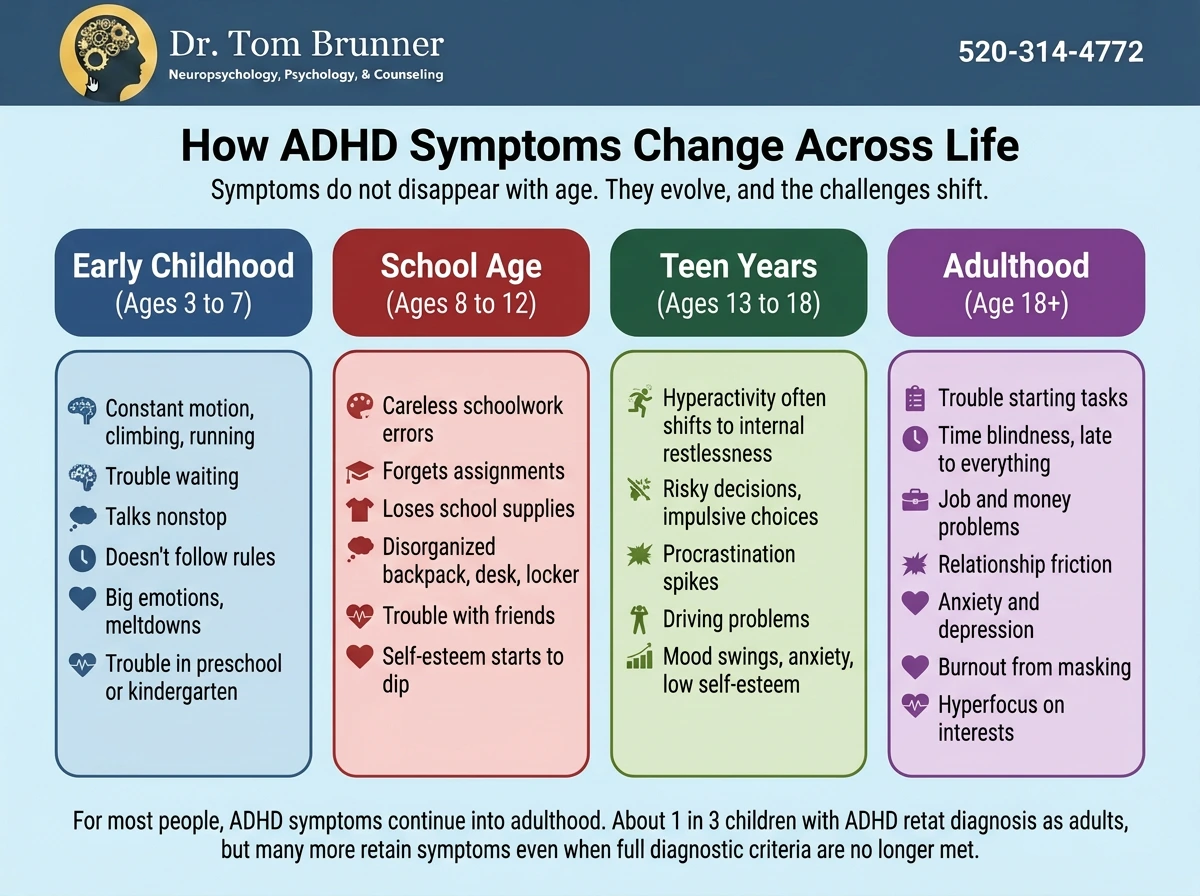
This is part of why so many adults are diagnosed late. They had clear childhood signs that nobody recognized at the time, and the more visible parts of the condition faded as they grew up. What is left behind is the inattention, the time blindness, the emotional intensity, and the burnout from compensating their whole lives.
What Is ADHD Paralysis?
ADHD paralysis is the term most people use for that frustrating feeling of being completely stuck. You know what you need to do. You may even want to do it. But you cannot move. According to the Child Mind Institute, ADHD paralysis is not an official diagnosis, but most people with ADHD recognize the experience instantly. It happens when several ADHD challenges collide at once, like procrastination, executive dysfunction, and overwhelm.
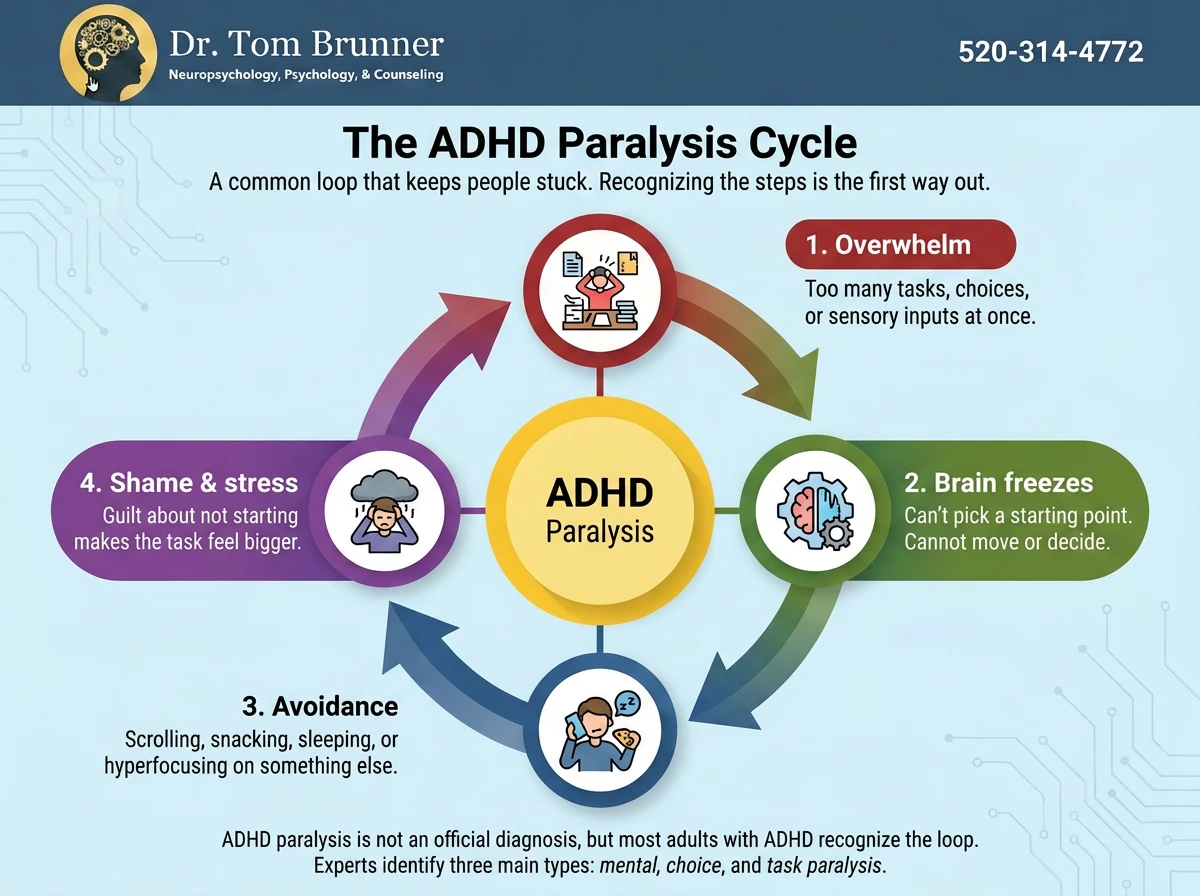
The three main types of ADHD paralysis
- Mental paralysis. A brain crash from too much information, sensory input, or emotional weight at once. Thoughts feel jumbled. Decisions feel impossible. Many people describe it as their brain going blank.
- Choice paralysis. Also called analysis paralysis. When facing too many options, the brain freezes instead of picking one. This can happen with big decisions like a job change, or tiny ones like what to make for dinner.
- Task paralysis. An inability to start or finish a task even when you want to. It is most common with boring or low-stimulation tasks like dishes, paperwork, or replying to a simple email. Avoidance often kicks in, leading to the cycle in the diagram above.
ADHD paralysis is not laziness, and it is not procrastination in the typical sense. It is what happens when an ADHD brain hits a wall it cannot push through using willpower. The way out is usually external: breaking the task into tiny pieces, body-doubling with another person, or removing the friction that triggered the freeze in the first place.
When to Seek an Evaluation
Recognizing signs in this article does not mean you or your child has ADHD. Many people have a few of these traits some of the time. ADHD is diagnosed when the symptoms are persistent, started in childhood, show up in more than one setting, and clearly get in the way of daily life.
That said, an evaluation is worth considering when:
- Several symptoms have been present for at least six months
- The symptoms are affecting school, work, relationships, or self-esteem
- You have a parent, sibling, or child with diagnosed ADHD
- You have already been treated for anxiety or depression but still feel something is off
- Your child is struggling academically or socially in ways that cannot be explained otherwise
- You are a woman whose life feels harder than it should, especially around hormonal changes
An evaluation can be done by a primary care provider, pediatrician, psychologist, or psychiatrist. A diagnosis often brings relief on its own, even before treatment starts, because it explains a lifetime of confusing patterns. From there, treatment options including therapy, medication, coaching, and lifestyle changes can dramatically improve daily life.
Quick Summary: ADHD Signs by Group
The chart below summarizes the most distinctive signs of ADHD across the four main groups covered in this guide. Many signs overlap, but each group has patterns worth knowing.
| Group | Most Distinctive Signs |
|---|---|
| Adults | Time blindness, trouble starting tasks, chronic lateness, emotional intensity, hyperfocus on interests, burnout from compensating |
| Women | Internal restlessness, masking, anxiety or depression diagnosed first, symptom intensity tied to hormones, late diagnosis (often after age 30) |
| Men | Visible physical restlessness, impulsive decisions, risk-taking, difficulty with paperwork, higher rates of substance use |
| Children | Constant motion (in younger kids), careless schoolwork errors, losing supplies, trouble waiting turn, big emotions and meltdowns |
Frequently Asked Questions About ADHD Symptoms
What are the most common signs of ADHD in adults?
The most common signs in adults are time blindness, trouble starting tasks, chronic disorganization, easy distraction, emotional intensity, and difficulty finishing projects. Hyperactivity in adults usually feels like internal restlessness rather than physical fidgeting.
How do ADHD symptoms differ in women?
Women are more likely to have inattentive-type symptoms with little visible hyperactivity. They often present with overwhelm, daydreaming, emotional sensitivity, and burnout from masking. Hormone changes around menstruation, pregnancy, and menopause can intensify symptoms.
What does ADHD look like in adult women specifically?
Adult women with ADHD often look like high-functioning people who are quietly exhausted. They juggle a lot, but it costs them. Common signs include trouble managing household tasks, late-night catch-up work, perfectionism, and feeling like they are barely keeping up despite working harder than everyone around them.
Can adults develop ADHD later in life?
ADHD does not appear out of nowhere in adulthood. The symptoms must have started before age 12 to fit the diagnosis. Many adults are diagnosed late because their childhood signs were missed, especially in girls or quiet, well-behaved kids.
What is ADHD paralysis?
ADHD paralysis is the feeling of being completely stuck, unable to start or finish a task even when you want to. It happens when overwhelm, executive dysfunction, and procrastination collide. There are three common types: mental, choice, and task paralysis.
Are ADHD symptoms different in boys and girls?
On average, yes. Boys are more likely to show hyperactive and impulsive symptoms early, which makes them easier to spot. Girls are more likely to be quiet daydreamers with inattention, which gets missed. The diagnostic criteria were originally built around boys, which is part of why girls are often diagnosed later.
How can I tell the difference between normal forgetfulness and ADHD?
Everyone forgets things sometimes. ADHD forgetfulness is more frequent, more disruptive, and shows up alongside other symptoms like trouble focusing, time blindness, and emotional dysregulation. If forgetfulness is causing real problems at work, school, or home, an evaluation is worth considering.
Sources
The information in this article was drawn from the following authoritative sources. Each link goes to the original publication.
- Centers for Disease Control and Prevention (CDC): About ADHD. Federal overview of ADHD symptoms, presentations, and risk factors used as the foundation for the symptom checklists in this article.
- Cleveland Clinic: ADHD in Women. Clinical overview of how ADHD presents in women, including the inattentive-type pattern and reasons for underdiagnosis.
- Child Mind Institute: What Is ADHD Paralysis?. Expert explanation of ADHD paralysis from the Child Mind Institute, including how it differs from typical procrastination.
- Cleveland Clinic Health Essentials: ADHD Paralysis. Clinical breakdown of the three types of ADHD paralysis (mental, choice, and task) and how they show up in daily life.
- Children and Adults with Attention-Deficit/Hyperactivity Disorder (CHADD). National nonprofit funded in part by the CDC. Source for general prevalence data and family resources referenced throughout.
- National Institute of Mental Health (NIMH): Attention-Deficit/Hyperactivity Disorder. Federal research summary on ADHD symptoms across the lifespan and the evolution of the condition from childhood to adulthood.
The Bottom Line
ADHD shows up in very different ways depending on who you are and where you are in life. The young boy who cannot sit still, the high school girl who daydreams through class, the woman who falls apart every month before her period, and the man who cannot finish what he starts may all be dealing with the same brain wiring.
If you saw yourself or your child in this article, the next step is simple: talk to a healthcare provider. A primary care doctor, pediatrician, psychologist, or psychiatrist can run a proper evaluation. Bring this checklist with you if it helps.
ADHD is one of the most treatable conditions in mental health, but only when it is recognized. The earlier the signs get named, the easier it becomes to build a life that works with the brain you have.